
Self-hosted domain expiration monitoring
Supadomain keeps a ledger of your domains and the day each one runs out. It reads every expiry date over RDAP and checks the ledger once an hour. When a domain crosses its alert threshold, your Slack channel gets a message. It is open source and runs on your own server with your own MongoDB.
- example.net16 Jan 2027Warning12d leftnotify days: 7, 1
- example.org07 Feb 2027Healthy34d leftnotify days: 30, 7, 1
- my-shop.example21 Feb 2027Healthy48d leftnotifications disabled
- example.com04 Aug 2027Healthy212d leftnotify days: 30, 7, 1
- legacy.exampleN/AUnknownno expiration event in the RDAP replyN/Anotify days: 30, 7, 1
The dark notch is the threshold that sends the alert. Lighter notches are the other thresholds set on that domain.
Illustration with made-up domains. The check is the one in server/plugins/cron.ts, run once per ledger day here and once an hour in the app. The message text and the orange bar are what slack.ts sends. Each domain alerts once, at its largest threshold. How alerts fire.
From a registry date to a Slack message
Four things happen between adding a domain and hearing about it. Nothing here leaves your server except the RDAP lookup and the Slack webhook call.
- When you add a domain
One RDAP lookup
The server requests
https://rdap.org/domain/example.org. rdap.org redirects to the RDAP server of the domain's registry, which answers in JSON. If the lookup fails, the domain is not added. There is no WHOIS fallback. - Stored in MongoDB
Four dates and the nameservers
Supadomain keeps these RDAP events, plus each nameserver's
ldhName.RDAP eventAction Stored field expiration expireTime registration registrationDate last changed lastUpdate last update of RDAP database lastUpdatedInRdap - Every hour, at minute 0
The stored date meets the thresholds
The hourly job reads from the database only. It does not call RDAP again, so press Refresh on a domain after you renew it. This is the check, from
server/plugins/cron.ts:const diffMs = new Date(domain.expireTime as Date).getTime() - now.getTime(); const diffDays = diffMs / (1000 * 60 * 60 * 24); const thresholds = (domain.notifyDaysBefore ?? [30, 7, 1]).slice().sort((a, b) => b - a); const triggeredThreshold = thresholds.find(t => diffDays <= t); if (triggeredThreshold !== undefined && domain.lastNotifiedDays !== triggeredThreshold) { const daysLeft = Math.floor(diffDays); const label = daysLeft < 0 ? `${Math.abs(daysLeft)} days since expiration` : `${daysLeft} days until expiration`; await sendSlackNotification(domain.url, label); - At the threshold
One message to your webhook
Slack receives the domain name and a line such as
29 days until expiration. The dashboard's activity list records that the alert went out. Set up Slack alerts.
How the dashboard reads a date
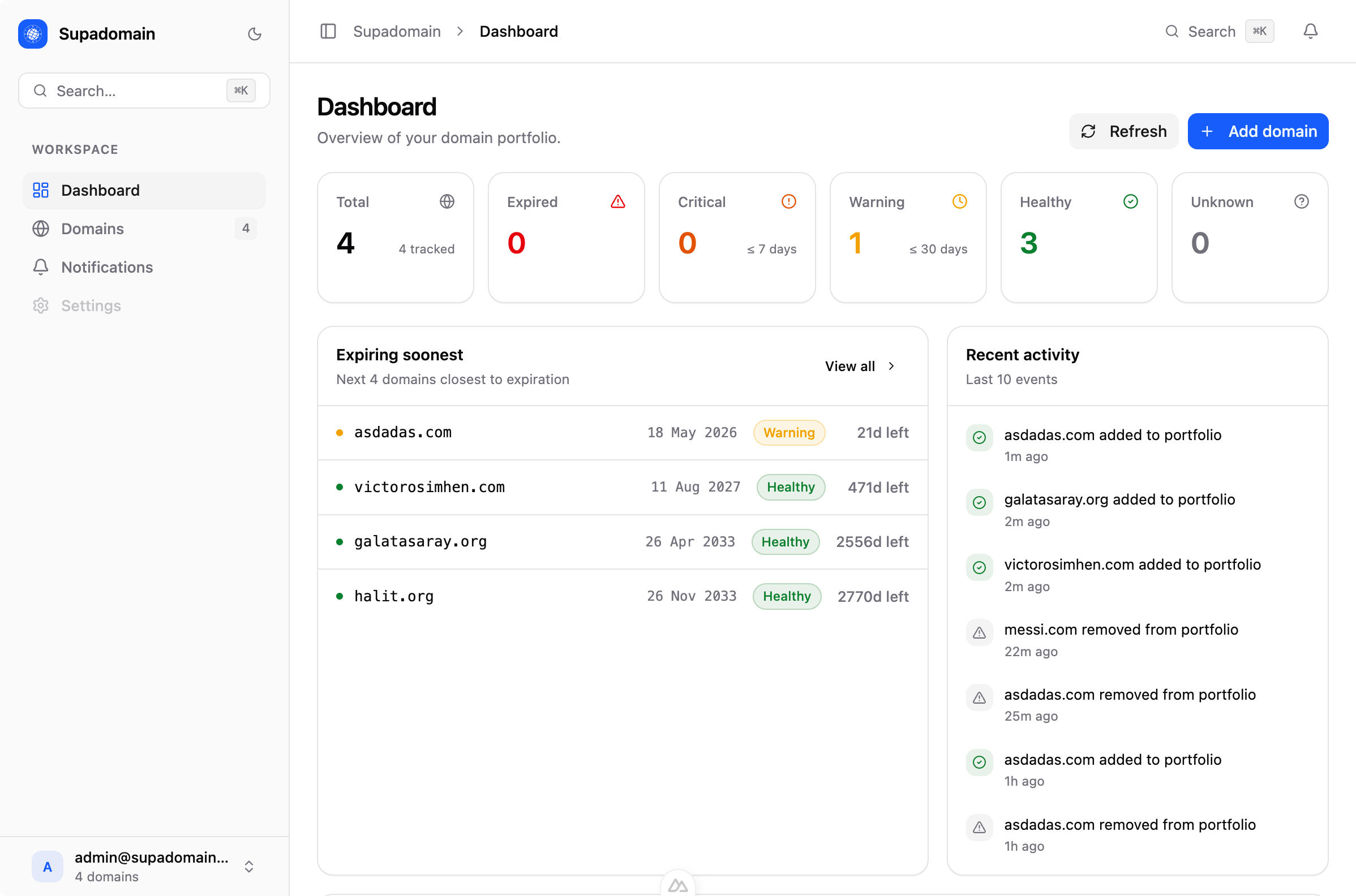
Every domain gets one of five statuses. The limits are fixed in the app and match the colours in the ledger above.
- HealthyMore than 30 days left
- Warning30 days or fewer
- Critical7 days or fewer
- ExpiredThe date has passed
- UnknownNo expiry date stored
Run it on your own server
You need Node.js 18 or later and a MongoDB instance. The first start against an empty database creates the admin account from ADMIN_EMAIL and ADMIN_PASSWORD. Leave the password out and a random one is printed to the server log.
git clone https://github.com/halitsever/supadomain.git
cd supadomain
npm install
cp .env.example .env

npm run build
node .output/server/index.mjsMONGODB_URI="mongodb://localhost:27017/supadomain"
NUXT_SESSION_PASSWORD="a-long-random-secret-min-32-chars"
ADMIN_EMAIL="admin@example.com"
ADMIN_PASSWORD="your-secure-password"What it leaves out
Supadomain is small on purpose. Knowing its limits up front saves you from finding them on the day a domain lapses.
- No WHOIS fallback
- A domain whose registry has no RDAP service cannot be added. RDAP vs WHOIS explains why and how to test a domain first.
- No automatic re-lookup
- The stored expiry date changes only when you press Refresh on the domain's page. Do that after each renewal.
- Slack only
- Alerts go to one Slack incoming webhook. There is no email or SMS channel.
- One admin account
- The app seeds a single login from your environment. It has no sign-up page and no user management.
New to this? Read how to monitor domain expiration for the manual options and where a self-hosted monitor fits.